
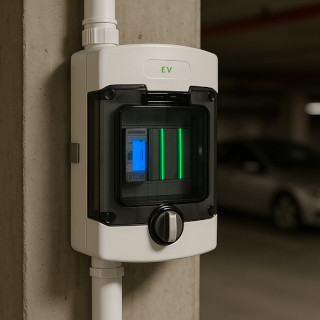
Startek’s Projects page identifies PowerLog as an IoT power usage tracker for EV charging infrastructure. The published brief describes smart energy monitoring and access control for shared power outlets across commercial, residential and public environments.
That short brief captures a common integration challenge: a shared outlet needs a defined user-access process and a useful record of power use. This project profile explains the verified PowerLog scope and the design questions a site owner should settle before commissioning a similar system.
The verified PowerLog project brief
The public Projects page supports four statements about PowerLog. It is an IoT power usage tracker, it relates to EV charging infrastructure, it combines smart energy monitoring with access control, and it is designed for shared power outlets in commercial, residential and public settings.
Startek also publishes broader capabilities that fit this type of work. Its Embedded Systems service connects field devices, sensors, software and infrastructure. Its Application Development service covers operational applications, customer and account portals, system integration, reporting and automation.
Define access before collecting power data
A site considering shared EV charging should start with the access rule. The project team needs to identify who can use each outlet, who grants or removes access, and what staff should do when a user cannot begin or end a session. Those decisions shape the controls and the records the system must keep.
The team should then define the power-usage record. Each value needs a source, a unit, a time reference and a link to the correct outlet or session. If the site needs reports or account records, the brief should state the required fields and the person responsible for reviewing exceptions.
- Users and permissions: name the user groups, approval process and access-removal process.
- Outlet identity: give each controlled connection a stable name that staff can match to the physical site.
- Usage record: define the required value, unit, timestamp and session reference.
- Exception handling: record the staff response to missing data, denied access or an incomplete session.
Connect the outlet, controller and application
An IoT energy monitoring project crosses several technical boundaries. Field equipment produces a state or measurement. A controller or gateway exchanges that information with software. The application links the information to the user and site workflow. The project brief must define each interface without assuming that a physical connection proves software compatibility.
For each connection, record the equipment model, power arrangement, communication method, data format and response to a lost link. Decide which functions need the network and which local functions must remain available during an interruption. Startek’s published Services describe embedded hardware, cloud connectivity, APIs, telemetry and automation platforms as parts of integrated electronics work. The chosen components and behaviour still depend on the approved site requirements.
Plan the operating record and support path
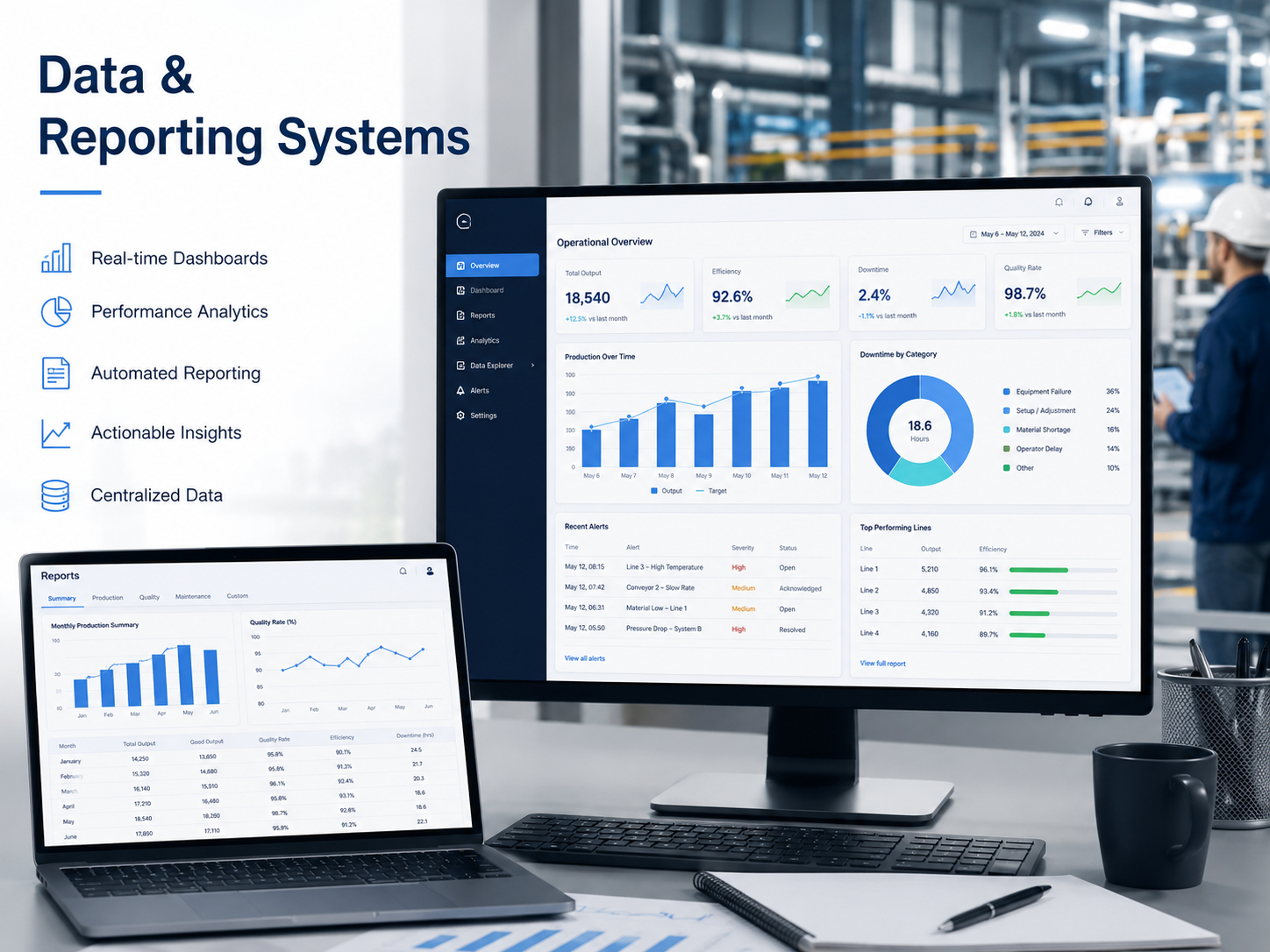
Power usage data becomes useful when the site team knows how staff will review it. The application brief should identify the required view, reporting period, account reference and export or integration needs. It should also define who can correct account details and how the system preserves an audit trail for authorised changes.
Support staff need evidence that separates a field-device fault from a communications or application fault. Useful records may include connection state, the last accepted reading, software version and a timestamped event history. The final diagnostic set belongs in the approved design because the public PowerLog description does not disclose its support architecture.
Commission the complete shared-outlet workflow
Commissioning should test the physical outlet, access decision, power record and staff process as one workflow. Workshop checks can prove software and controller behaviour with available equipment. Site acceptance then checks the installed supply, network, outlet identity and operating procedure.
- Confirm each physical outlet matches its name in the application and support records.
- Test authorised and denied access against the approved user rules.
- Check that a session produces the required time and power-usage record.
- Test connection loss, restart and the staff recovery process.
- Record the acceptance result and the person who approves each requirement.
The acceptance plan should use site-owned requirements rather than a generic product demonstration. A commercial property, residential site and public facility may set different rules for users, records, support access and network ownership.
Prepare an IoT energy monitoring enquiry
A useful first brief includes the number and location of shared outlets, the user groups, available power and network infrastructure, required usage records, access rules and support responsibilities. Add photographs, equipment details and any existing software that must receive data.
PowerLog shows Startek’s published work in smart energy monitoring and access control for shared power outlets. Review the wider project portfolio, then use the contact page to discuss a shared EV charging or power-usage monitoring requirement.